
Collagen After 40 — The Shilajit Research
After 40, Your Body Quietly Stops Rebuilding Collagen. Researchers Found an Ancient Mountain Resin That Switches the Process Back On.
Clinical trials on shilajit measured collagen genes, collagen-building markers in the blood, bone density in postmenopausal women, and female intimacy scores. Here's what the numbers actually show — and why Dr. Fab Mancini is talking about it.

Updated October 2026 · 7 min read

Collagen is the scaffolding of the female body. It's about 30% of all the protein you carry — it's what keeps skin firm, joints cushioned, and the inside of every bone strong enough to hold you up.
The problem is that after 40, the body makes less of it every year. When estrogen drops at menopause, the decline speeds up sharply: a classic study found women lose about 30% of their skin collagen in the first five years after menopause.7
That's why so many women start buying collagen powders. But there's a catch most labels don't mention: swallowing collagen doesn't tell your body to make more of its own. The machinery that builds collagen — the genes, the cells, the signaling — is the part that slows down with age.
That's exactly where shilajit comes in. And the research on it is more specific than most people expect.
A dark, mineral-rich resin that seeps out of high-altitude rock in mountain ranges like the Himalayas and the Altai. It forms over centuries as plant matter breaks down under pressure. Its main active compounds are fulvic acid, dibenzo-alpha-pyrones (DBPs), and dozens of trace minerals. Traditional medicine has used it for thousands of years; modern labs have only recently started measuring what it does.
The collagen research: three studies, three steps of the same process
Your body builds collagen in stages. First, cells switch on collagen genes. Those genes produce procollagen, the raw building block, which shows up in your blood. Then it's assembled into fibers — while older collagen is constantly being broken down. Researchers have studied shilajit at all three points.
Study 1: The collagen-building marker nearly doubled — and more than doubled at the higher dose
At the University of Nebraska–Lincoln, researchers ran a double-blind, placebo-controlled trial. For 8 weeks, participants took 500 mg of purified shilajit, 1,000 mg, or a placebo. Then they measured pro-C1α1 in the blood — a direct marker of how much type 1 collagen the body is producing. Type 1 is the main collagen in skin and bone.
Study 2: Collagen genes up to 5.3× more active
An earlier human study took tissue biopsies before and after 8 weeks of shilajit (250 mg twice a day) and looked at which genes had become more active. The standouts were the genes that code for collagen itself — plus elastin and fibrillin, the proteins that give tissue its bounce.
Study 3: Less collagen being broken down
Building collagen is only half the equation. In a separate 63-person placebo-controlled trial, 8 weeks of 500 mg/day shilajit lowered hydroxyproline, a blood marker of collagen breakdown — and helped participants hold on to more strength after a fatiguing workout. More building, less breakdown: that's the direction you want after 40.
Active men. Keller JL et al., Journal of the International Society of Sports Nutrition, 2019.3
In middle-aged women, shilajit switched on skin-support genes and increased blood flow to the skin
Researchers at Indiana University followed healthy adult women for 14 weeks, comparing two doses of shilajit against a placebo. They took skin biopsies and measured blood flow to the skin.
The higher dose (250 mg twice a day) improved skin microperfusion — the tiny blood vessels that feed skin cells oxygen and nutrients — compared with both baseline and placebo. The biopsies showed activation of genes tied to the extracellular matrix, the collagen-and-elastin network that keeps skin firm. No adverse effects were reported.
This study measured genes and blood flow, not wrinkles. Das A et al., Journal of the American College of Nutrition, 2019.4
Collagen isn't just skin. It's the frame inside your bones.
Bone is a living collagen framework filled in with minerals. When estrogen falls, the body starts breaking bone down faster than it rebuilds it. That's why the most important shilajit trial to date was done entirely in women.
| Measure | Placebo | 250 mg | 500 mg |
|---|---|---|---|
| Spine & hip bone density | Kept declining | Better preserved | Best preserved |
| Bone breakdown markers | No improvement | Lower | Lowest |
| Inflammation (hsCRP) | No improvement | Lower | Lowest |
| Oxidative stress | No improvement | Lower | Lowest |
| Antioxidant defense (glutathione) | No improvement | Higher | Highest |
The authors noted the extract they tested had previously shown anti-inflammatory, antioxidant and collagen-inducing effects, and concluded it helped protect against bone loss in these women. It's the longest shilajit trial ever run — and it was done in exactly the women who need it most.
The finding nobody expected: intimacy
For years, shilajit was marketed almost entirely to men. Then a triple-blind, placebo-controlled trial tested it in women. Participants took 200 mg shilajit tablets twice a day for 60 days and were scored on the Female Sexual Function Index (FSFI) — the standard clinical questionnaire covering desire, arousal, lubrication, orgasm, satisfaction, and comfort.
The researchers didn't measure hormone levels, so the exact reason isn't known yet. Leading theories include better blood flow and more energy — the same microcirculation effect seen in the women's skin study.
Why Dr. Fab is talking about it

Dr. Fab has spent his career helping people take a natural, whole-body approach to aging well. In his interview with Pro Vibe Life, he explains why shilajit — a mineral-rich resin used for centuries — is getting renewed attention from researchers, and why it captured his.
Watch Dr. Fab's interview →How to match what the research used
Quality matters as much as dose. Raw shilajit can carry heavy metals, which is why purification and third-party testing aren't optional. Look for a brand that publishes its lab results — here are ours.

What customers are saying
"I am a woman in my mid-40s. I have noted a significant increase in my energy levels and fewer highs/lows due to hormonal fluctuations. However, the most spectacular difference I have seen with using Pure Vibe Shilajit is with my hair. Not only do I have new hair growth, but less hair breakage. My hair is shinier, stronger, and more healthy than it has been in 20+ years according to my hairdresser."
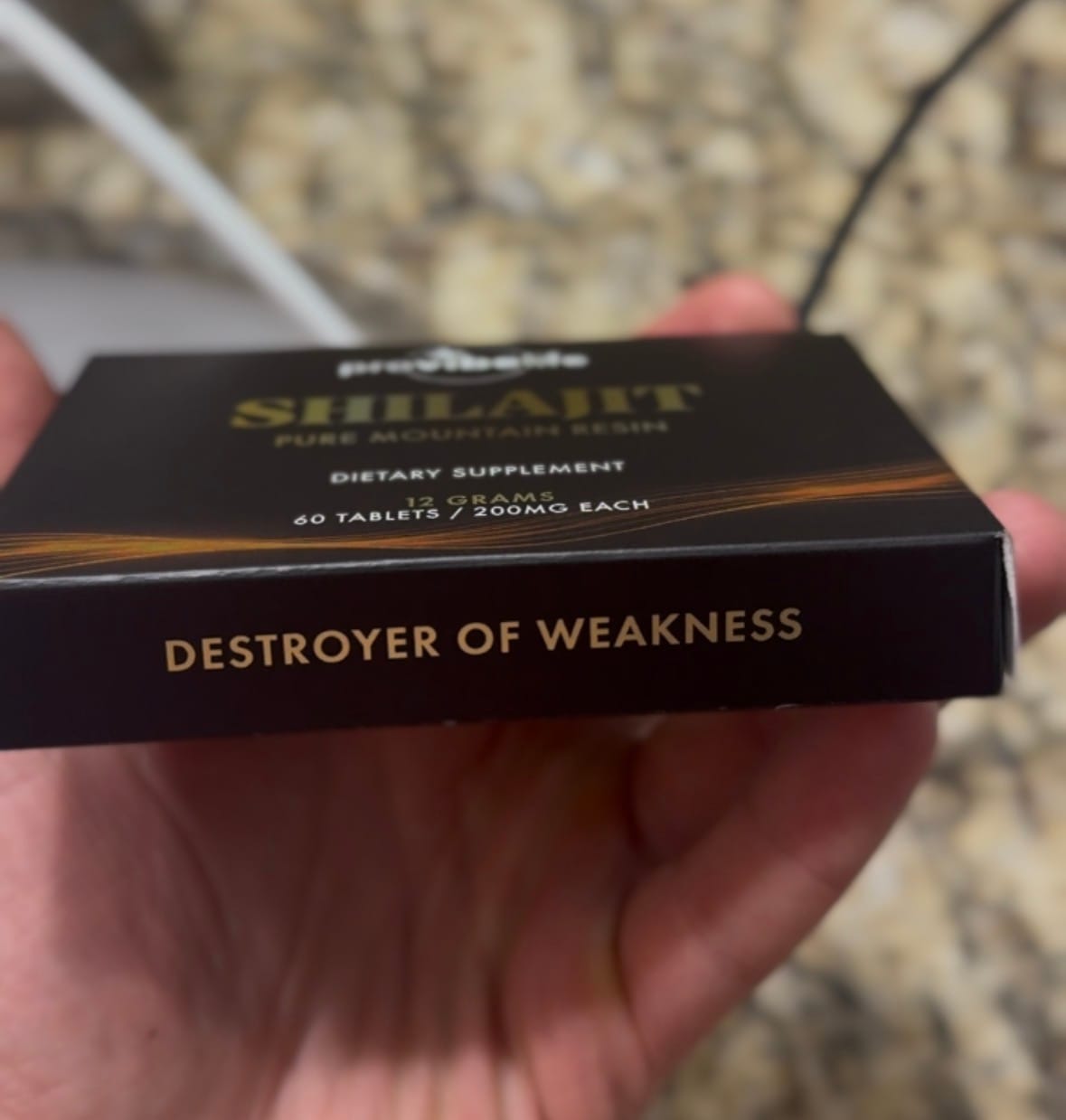
"I began taking Pure Vibe Shilajit a year ago regularly. I'm amazed at how much it has benefited my overall health. My hair has even become drastically thicker and my curls I had when I was younger are back! I have turned a few friends onto it as well."
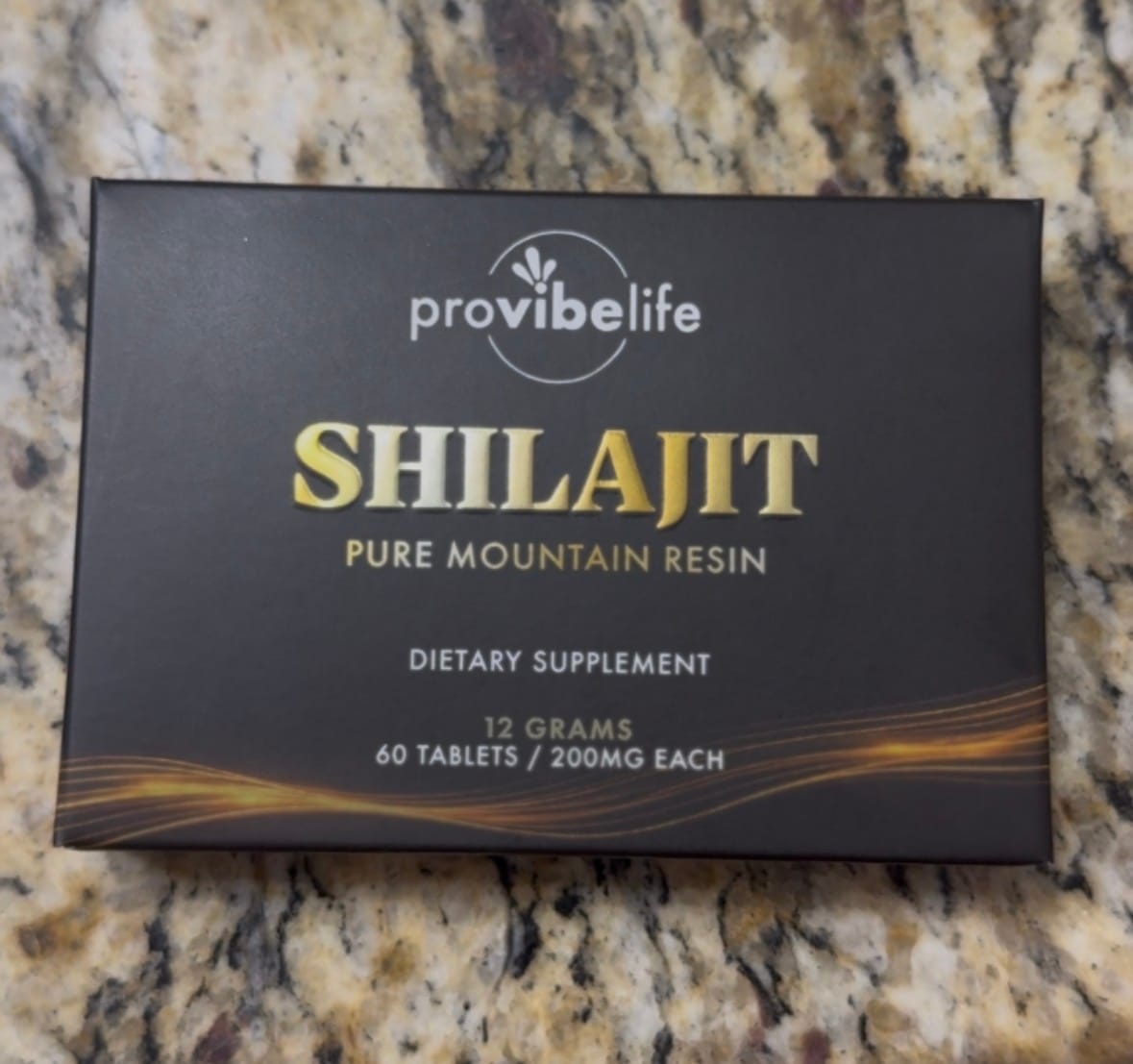
"I've tried a bunch of different Shilajit products over the years, but this one is on another level. What really sold me is how pure it feels, no metallic taste, no weird grit, just smooth, potent tablets that dissolve easily."
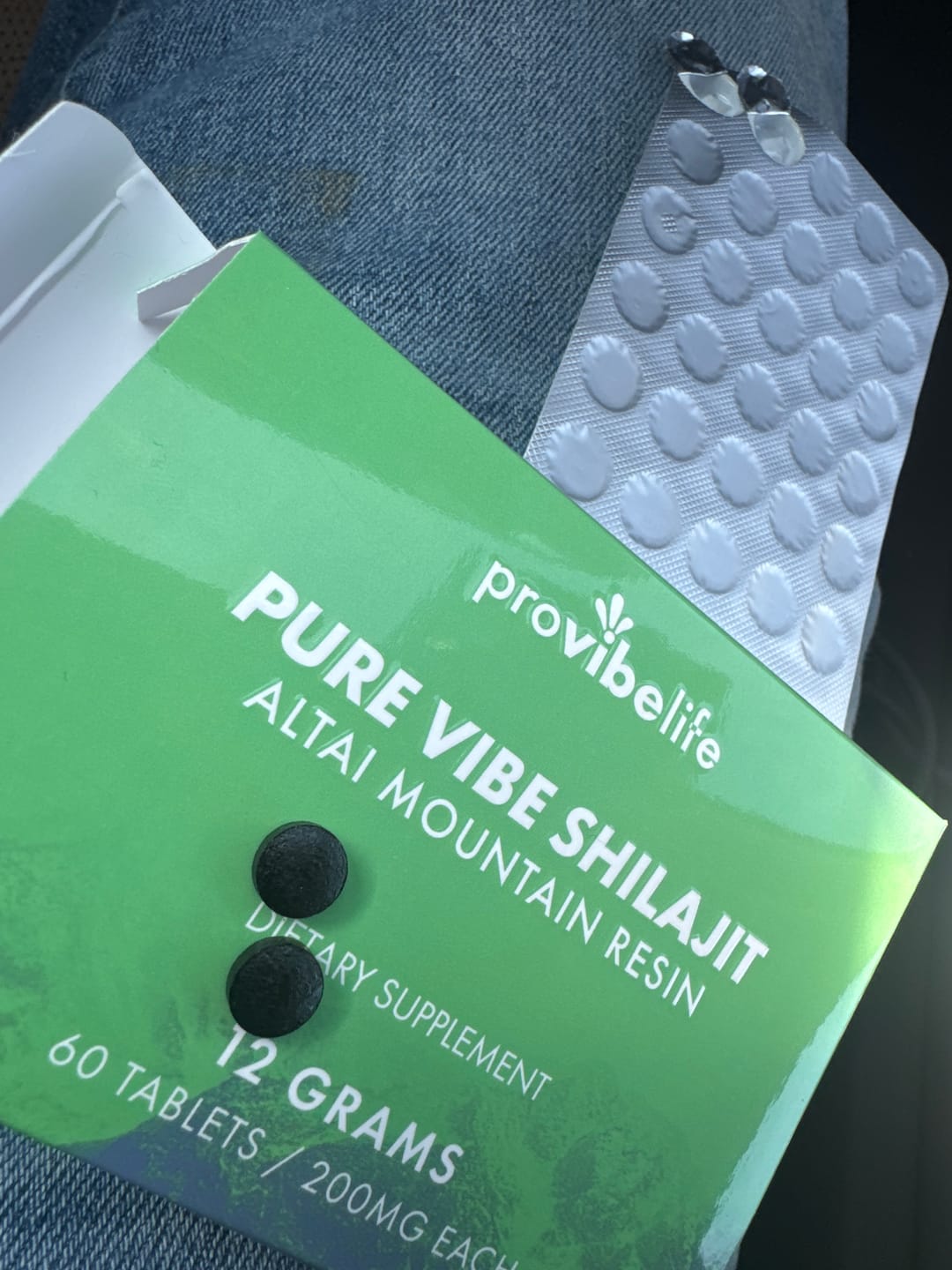
"I love this Shilajit it is hands down one the best brands on the market. Why pay more for overpriced junk? These tablets are 100% pure, tested and you can feel that in the effects. My family and I use it daily!"
Individual experiences. Results vary.
Who should talk to a doctor first
Skip shilajit if you're pregnant or breastfeeding. Check with your doctor first if you have a thyroid condition, iron overload (hemochromatosis), kidney disease, or take hormone therapy or other prescription medications.
- Neltner TJ, et al. Effects of 8 weeks of Shilajit supplementation on serum pro-c1α1, a biomarker of type 1 collagen synthesis: a randomized control trial. J Diet Suppl. 2024;21(2). PMID 36546868.
- Das A, et al. The human skeletal muscle transcriptome in response to oral Shilajit supplementation. J Med Food. 2016.
- Keller JL, et al. The effects of Shilajit supplementation on fatigue-induced decreases in muscular strength and serum hydroxyproline levels. J Int Soc Sports Nutr. 2019;16:3. PMID 30728074.
- Das A, et al. Skin transcriptome of middle-aged women supplemented with natural herbo-mineral Shilajit shows induction of microvascular and extracellular matrix mechanisms. J Am Coll Nutr. 2019;38(6):526–536. PMID 31161927.
- Pingali U, Nutalapati C. Shilajit extract reduces oxidative stress, inflammation, and bone loss to dose-dependently preserve bone mineral density in postmenopausal women with osteopenia. Phytomedicine. 2022;105:154334. PMID 35933897.
- Mosavi S, et al. Effects of oral Shilajit tablets on sexual function and sexual quality of life among reproductive-aged women: a triple-blind randomized clinical trial. Tradit Med Res. 2023;8(11):66.
- Brincat M, et al. A study of the decrease of skin collagen content, skin thickness, and bone mass in the postmenopausal woman. Obstet Gynecol. 1987;70(6):840–845. PMID 3120067.
Studies 1–5 used PrimaVie®, a branded purified Himalayan shilajit extract; study 6 used shilajit tablets. Pro Vibe Life products were not the products tested in these studies. Results describe the studies cited and are not a guarantee of individual results.
Advertising disclosure: This page is an advertisement for Pro Vibe Life. Dr. Fab Mancini has a material connection to Pro Vibe Life.
These statements have not been evaluated by the Food and Drug Administration. This product is not intended to diagnose, treat, cure, or prevent any disease.


